
$15B by 2030 (deck reference)
Global market signal
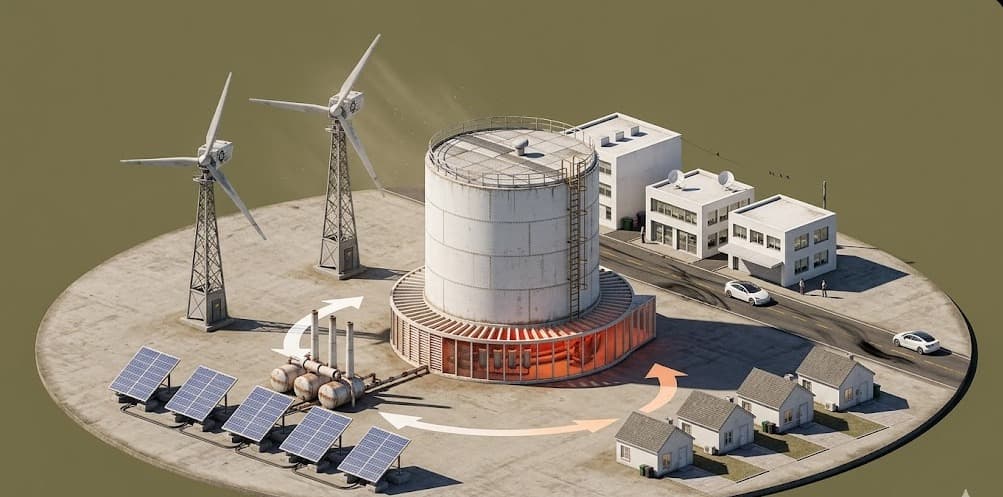
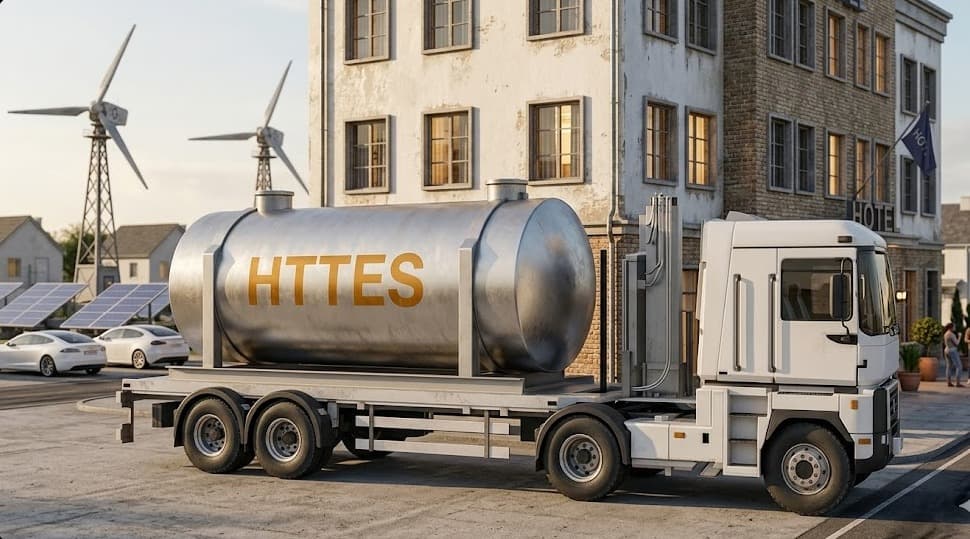
WasteHeatHub addresses industrial waste heat, district heating solutions, and data center heat reuse with pragmatic deployment models.
$15B by 2030 (deck reference)
Global market signal
25 GW by 2030 (deck reference)
CSP capacity context
~40% CAGR (deck reference)
Growth signal
Market context
Illustrative references from investor materials; not forecasting advice.
Recover and dispatch heat from furnaces, kilns, and thermal processes to offset fossil-based process heat demand.
Convert variable heat sources into dispatchable thermal supply that aligns with network load and seasonal demand.
Capture low and medium-grade thermal streams and upgrade them for nearby buildings and industrial loads.
Use modular capture and storage assets for phased expansion from single-site reuse to multi-offtaker district heating solutions.
Annual available waste heat, source temperature, offtaker distance, demand profile, and baseline heat economics.
Q1
Yes, projects are designed to replace high-emission heat demand with recovered and stored thermal energy.
Q2
High-heat industries, district heating operators, and data center campuses with nearby thermal demand are strong candidates.
Q3
Distance to the offtaker influences transport losses, capex profile, and dispatch design. This is captured in first-pass screening and refined in engineering.
Q4
Yes, projects can start with one emitter-offtaker pair and expand into larger heat networks over time.
Q5