
400-1000C
HTTES temperature range
Our stack combines high temperature thermal energy storage and thermochemical energy storage for stable district heating solutions and process heat decarbonization.
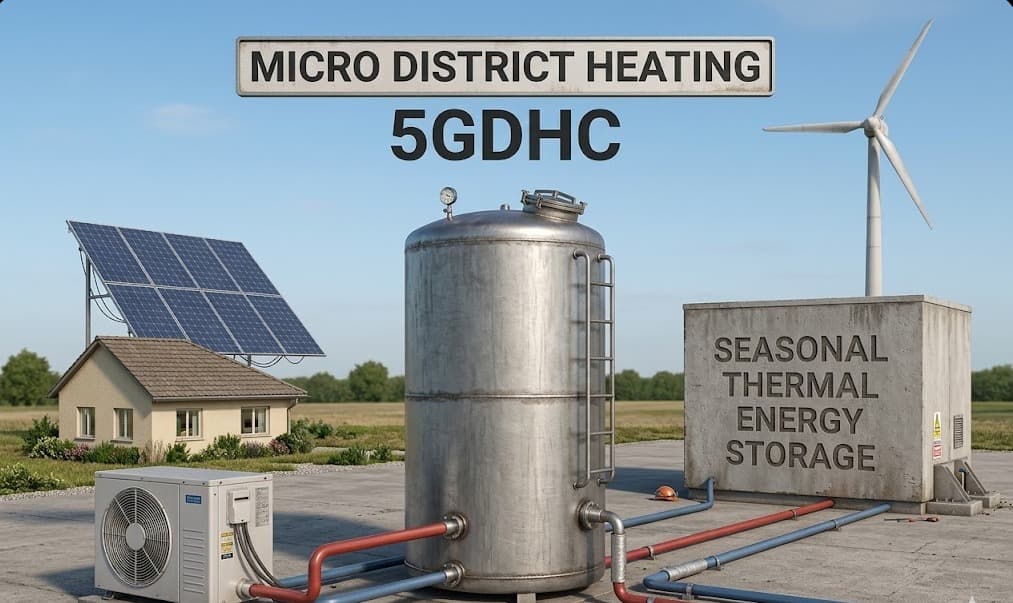

400-1000C
HTTES temperature range
100-1000C
TCES temperature range
30+ years
HTTES lifespan target
Visual system profile
Ranges cited on this page (80–95% HTTES, up to ~98% TCES) shown as stacked min→max — illustrative, not project-specific.
Normalized scores show typical trade-offs: HTTES favors fast dispatch; TCES favors long-duration buffering.
The platform integrates high temperature thermal energy storage (HTTES) and thermochemical energy storage (TCES) to buffer variable industrial waste heat and deliver dispatchable thermal output.
High-temperature thermal energy storage supports typical operation in the 400-1000C band with rapid response suited for industrial balancing and district heating support.
Thermochemical energy storage uses reversible reactions for high energy density and long-duration storage with near-zero standing losses over long storage periods.
Integrated operation is validated at TRL6 in a relevant environment, supported by more than 26 years of energy systems engineering, international patent filings in Europe and the United States, and recognised innovation including the Ecocell ionic heating platform (award recognition at the 8th Slovenian Innovation Forum).
HTTES — validated technology platform: a pilot deployment is operating in Italy, engineered for industrial-scale waste heat recovery and compatible with district heating networks. TCES reactor system — TRL6: prototype validated in a relevant operational environment. Together, these technologies target long-duration thermal storage with very low standing losses so heat captured in one period can be delivered months later.
WasteHeatHub™ is validating HTTES through a pilot deployment in Italy, demonstrating high-temperature waste heat capture, long-duration thermal storage, integration with industrial heat sources, and potential supply paths toward district heating infrastructure. The pilot underpins delayed energy delivery and new contracted heat market models.
The WasteHeatHub™ programme builds on more than 26 years of experience in energy systems engineering and innovation, including internationally pursued patent protection, award recognition at the Slovenian Innovation Forum, development of advanced thermal energy systems, and industrial efficiency initiatives across Europe. The focus is unlocking the economic value of waste heat and converting it into a tradable thermal product.
Technology development is aligned with European energy and industrial expectations, including the EU Energy Efficiency Directive (EED), waste heat recovery initiatives, industrial heat integration best practices, and compatibility with district heating infrastructure. Architecture principles emphasise high-temperature industrial safety, modular energy infrastructure, and scalable thermal storage.
The process captures industrial waste heat, upgrades and stores it, then routes useful heat to industrial users and district heating networks.
TRL6 means the integrated architecture has been validated in a relevant operating environment.
Q1
Yes, the dispatchable design targets stable heat delivery for district heating and industrial demand.
Q2
The combination can balance fast-response delivery and long-duration storage for variable industrial waste heat streams.
Q3
No. Content and calculator outputs are indicative and become project-specific only after engineering studies and contractual scope definition.
Q4
Development includes internationally filed patent applications and protected know-how in thermal conversion, storage, and integration. Detailed positions are shared under NDA with qualified partners.
Q5